Passive sensor
Overview of lab-scalable electrode fabrication
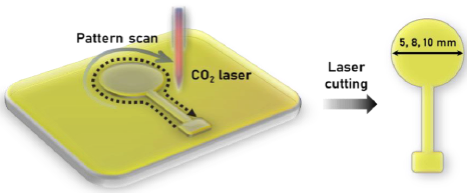
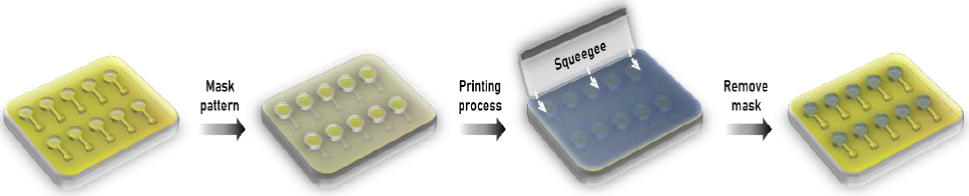
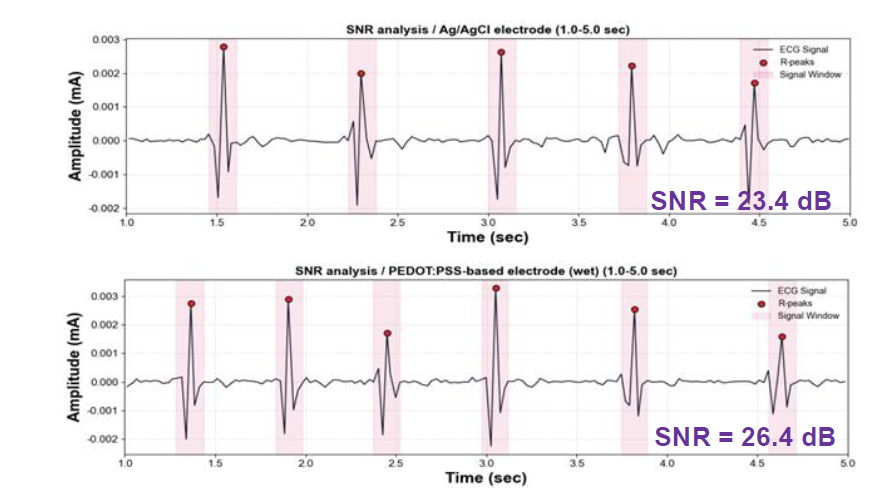
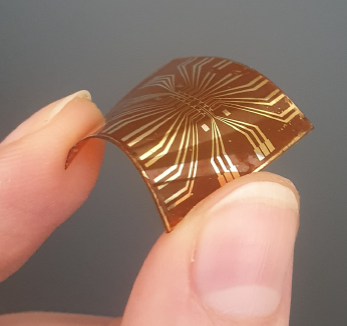
We consider two types of sensors. We realize organic electrodes created by coating with the bio compatible polymer PEDOT:PSS, which improve impedance and flexibility of the sensors.
Active sensor
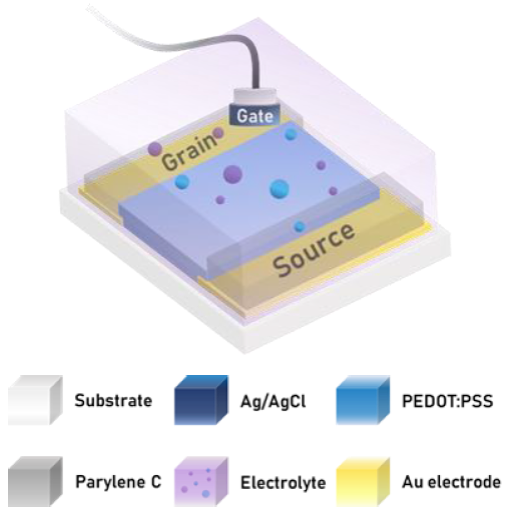
We also develop active sensors using organic electrochemical transistors (OECTs) where the potential difference on the human body serves as the potential of the gate electrode. Active sensors directly amplify the electrophysiological data with current read in the transistor channel.
OTFTs for processing data
The development of the organic thin film transistors (OTFTs) consists of two technologies. First, we use an already established technology of pOTFTs and low K dielectric (left), called GEN1, to prototype the first circuits. Second (right), we develop a high K dielectric technology (GEN2) that enables operation at lower threshold voltages to realize low power devices.
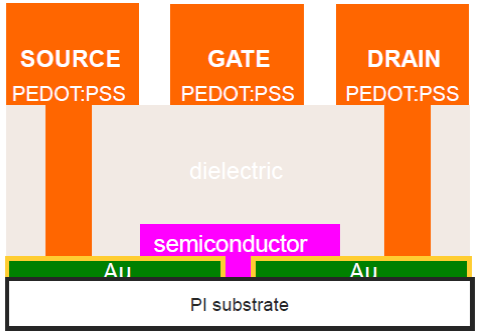
Cross View Gen 1
Cross View Gen 1
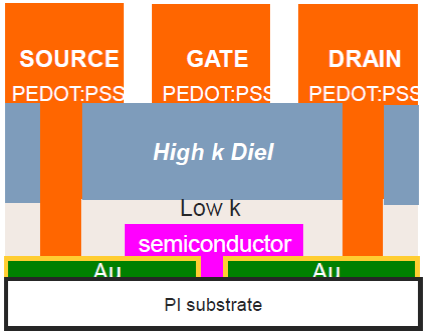
Cross View Gen 2
Cross View Gen 2
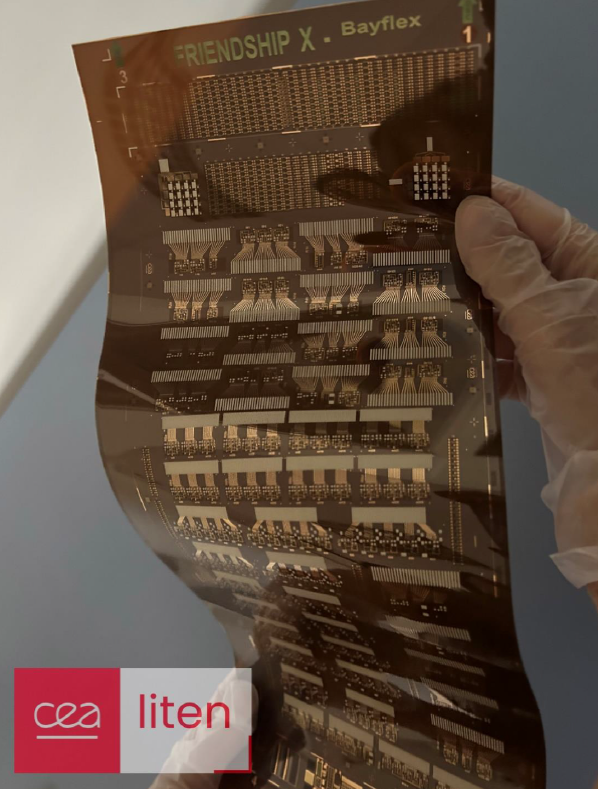
BAYFLEX circuits in GEN1 OTFT technology
BAYFLEX circuits in GEN1 OTFT technology
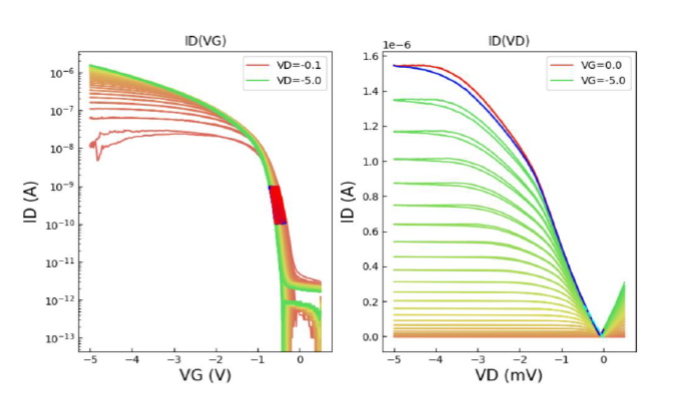
GEN2 transistors with low threshold voltage
GEN2 transistors with low threshold voltage
OECTs for classification
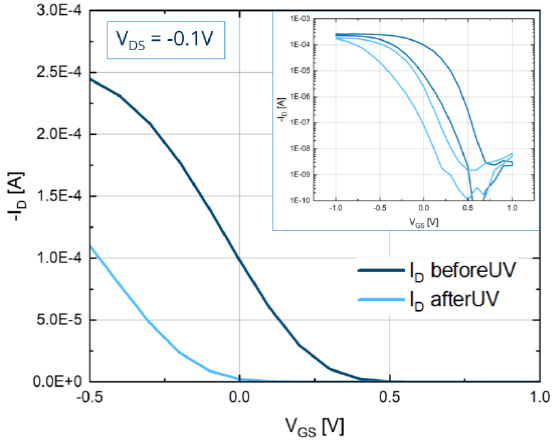
Results
We have successfully developed a method for integrating the 3 technologies just discussed, details will be posted soon.